
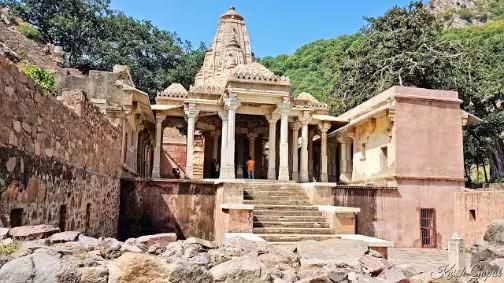
Welcome to the official website of Tijara, the gateway to one of Rajasthan’s most sacred and historically compelling pilgrimage sites: the magnificent Tijara Jain Temple. Nestled serenely in the Khairthal-Tijara district of Rajasthan, this temple, also known as an Atishaya Kshetra (a place where miracles happen), holds immense spiritual and cultural importance, particularly for the Digambar Jain community. This detailed article will guide you through the fascinating history of its unexpected rediscovery, explore the breathtaking architectural beauty of the temple complex, and highlight its profound religious significance in the region of Tijara Alwar. By the end of this narrative, you will understand why the Tijara Jain Temple is not merely a destination but a transformative spiritual experience, urging you to plan your own pilgrimage to this hallowed ground in Tijara.
The Miraculous Rediscovery: The Rebirth of the Tijara Jain Temple
The history of the Tijara Jain Temple is a remarkable tale of faith and serendipitous discovery, cementing its place as an Atishaya Kshetra in Tijara Alwar. For centuries, the ancient city of Tijara was believed to have been a prominent Jain center, often referred to in old scriptures as a ‘Dehra’ – a site specifically dedicated to the worship of Jain idols – a prominence that was tragically lost to history and the ravages of time. The modern story of the Tijara Jain Temple begins in 1956. During a local excavation, a devout Jain merchant recovered a stunning white marble idol of Chandraprabhu, the eighth Tirthankara of the Jain faith. This main idol, approximately 15 inches tall and seated in the Padmasana posture, was dated by its inscription to the year V.S. 1554 (corresponding to 1497 CE), proving the antiquity of the site in Tijara. This singular find reinforced the deeply held belief that the land of Tijara Alwar held buried spiritual treasures. The subsequent establishment of the modern Tijara Jain Temple complex around this rediscovered idol marked the powerful reawakening of Tijara as a major pilgrimage center. Further strengthening the site’s miraculous reputation, another similar black stone idol of Lord Chandraprabhu, eight inches tall, was discovered in 1972 under the guidance of Pujya Acharya Nirmal Sagarji Maharaj, solidifying the sanctity of the Tijara Jain Temple for devotees from around the world.
Architectural Grandeur: A Sanctuary of Carved Stone in Tijara Alwar
The majestic Tijara Jain Temple complex stands today as an exquisite showcase of modern religious architecture, seamlessly incorporating elements of traditional Jain design into a grand, expansive structure in Tijara Alwar. The main temple, rectangular in shape, is adorned with elaborate carvings and a sky-high pinnacle that dramatically breaks the skyline of Tijara. Constructed primarily from white stone, which symbolizes purity and spiritual clarity, the temple’s exterior is a vision of intricate artistry, featuring sculpted depictions of stories from Jain mythology and the lives of the Tirthankaras. The interior is equally breathtaking; the spacious central hall, built to accommodate over two thousand devotees at once, is magnificently decorated with meticulous glasswork and vibrant paintings. These colorful murals depict significant events and legends from Jain history, creating a visually rich environment conducive to deep spiritual contemplation. A prominent feature within the complex of the Tijara Jain Temple is the towering Manastambha, or column of honor, a symbolic structure integral to nearly all major Jain temples, reminding every visitor to shed their ego and embody humility upon entering this sacred Tijara space. Furthermore, the presence of the Chandragiri Vatika, featuring a massive, 15-foot granite idol of Chandraprabha, adds another layer of architectural and artistic majesty to the pilgrimage experience in Tijara Alwar.
The Spiritual Epicentre: Religious Significance of Tijara
The Tijara Jain Temple is far more than an architectural landmark; it is a dynamic spiritual epicentre and a vital Tirtha (pilgrimage site) that drives the faith of the Jain community in Tijara Alwar and beyond. Dedicated to the worship of Bhagwan Chandraprabhu, the eighth Tirthankara, the temple’s designation as an Atishaya Kshetra profoundly influences its religious importance. Devotees flock to the Tijara Jain Temple with the deeply held belief that sincere prayers offered here are answered, and that the site itself possesses miraculous power capable of alleviating sufferings and curing ailments, a faith that is reinforced by the dual discovery of the ancient idols. The temple complex is a hub of continuous ritual activity, where ceremonies such as Abhishek (anointing the idol with holy substances) and various forms of meditation are performed daily. Key to its annual calendar are major festive days like Falguni Vadi Saptami and Shravan Shukla Dasami, which draw a massive confluence of pilgrims to Tijara, transforming the entire area into a massive, vibrant gathering of devotion. Beyond the main shrine, the complex is enhanced by other ancient places of worship, including a 250-year-old Parshvanath Temple and a Navagraha Temple, underscoring the long-standing spiritual prominence of Tijara Alwar as a cradle of Jain religious life.
Key Spiritual Highlights and Cultural Offerings at Tijara
The enduring legacy of the Tijara Jain Temple lies not only in its spectacular architecture but also in its deep spiritual and cultural ecosystem in Tijara Alwar. For both the devotee and the history enthusiast, several distinct features elevate the experience, offering profound insights into the Jain faith and the local heritage of Tijara. Planning a visit requires an appreciation for these key takeaways to truly grasp the sanctity of the location. The following aspects detail the unique blend of spirituality and tradition maintained at this sacred site in Tijara Alwar:
- Status as an Atishaya Kshetra: The Tijara Jain Temple is renowned as a ‘Place of Miracles’ where a strong, collective belief exists that the site holds special healing and wish-fulfilling powers, driving the continuous pilgrimage to Tijara.
- The Main Idol of Chandraprabhu: The centerpiece is the 15-inch white marble idol of the eighth Tirthankara, Chandraprabhu. This idol’s inscription, dating it to V.S. 1554, confirms the site’s ancient importance as a ‘Dehra’ in Tijara Alwar.
- Architectural Details and Artistic Interiors: The temple’s vast hall features exquisite glasswork and colorful murals depicting Jain mythology, transforming the interiors into a mesmerizing space for contemplation and spiritual art appreciation in Tijara.
- Manastambha and Chandragiri Vatika: The towering Manastambha symbolizes humility, while the Chandragiri Vatika garden area houses a striking 15-foot granite idol, emphasizing the dedication to grand spiritual structures within the Tijara Jain Temple complex.
- Community and Dharamshala Facilities: The site is a self-sufficient spiritual town, offering lodging (Dharamshala) and Bhojnalaya (food) facilities for pilgrims, fostering a strong sense of community and support for visitors to Tijara Alwar.
Essential Tips for a Meaningful Pilgrimage to Tijara Alwar
Visiting a deeply revered pilgrimage site like the Tijara Jain Temple requires a different approach than typical tourism; it calls for respect, planning, and an open heart. To ensure your visit to Tijara Alwar is spiritually rewarding and logistically smooth, adhere to these expert tips. These steps are designed to help you connect with the sanctity of the Tijara Jain Temple and fully appreciate the local surroundings in Tijara:
- Plan Around Major Festivals: For a vibrant and immersive cultural experience, schedule your visit to the Tijara Jain Temple during annual festivals such as Falguni Vadi Saptami or Shravan Shukla Dasami, when the site in Tijara Alwar is bustling with religious fervor and activities.
- Observe Temple Etiquette: As the Tijara Jain Temple is an active place of worship, visitors should wear modest clothing that covers the shoulders and knees, remove all leather items before entering the premises, and maintain silence and reverence within the main shrine.
- Witness the Abhishek Ceremony: Arrive early in the morning to observe the Abhishek ritual, the sacred bathing of the main idol of Lord Chandraprabhu. This is a profound and moving devotional practice that is central to the daily worship at the Tijara Jain Temple.
- Explore the Extended Complex: Do not limit your visit to the main temple. Take time to explore the adjacent, older temples like the 250-year-old Parshvanath Temple and the impressive Chandragiri Vatika for a complete experience of the spiritual history of Tijara.
- Combine with Regional Sightseeing: Since Tijara Alwar is well-connected, leverage the location to visit other regional gems like the historic Tijara Fort, the serene Siliserh Lake, and the Alwar City Palace, integrating spirituality with heritage tourism in Tijara.
Conclusion
The Tijara Jain Temple stands as a luminous beacon of faith and history, a miraculous site whose rediscovery cemented the spiritual map of Tijara Alwar. From the unexpected uncovering of the ancient Chandraprabhu idol to the current complex’s grand architecture and vibrant community life, the temple beautifully encapsulates the enduring strength of the Jain tradition. It is a place of profound peace, architectural splendor, and miraculous conviction. We encourage all spiritual seekers, history lovers, and pilgrims to experience the unique sanctity of this Atishaya Kshetra firsthand. Visit the official website, Tijara, to learn more and begin planning your meaningful pilgrimage to the sacred heart of Tijara Alwar.
Frequently Asked Questions (FAQs)
Q1: What is the main deity of the Tijara Jain Temple?
The main deity is Bhagwan Chandraprabhu, the eighth Tirthankara (spiritual leader) in Jainism. The temple’s central idol is a majestic 15-inch white marble statue of Lord Chandraprabhu in the Padmasana posture, the focus of worship in Tijara Alwar.
Q2: What does Atishaya Kshetra mean in the context of Tijara?
Atishaya Kshetra translates to a ‘Place where Miracles Happen’ or ‘Place of Salvation.’ The Tijara Jain Temple earned this designation due to the miraculous discovery of the ancient idols and the belief that the site holds special wish-fulfilling and curative powers in Tijara.
Q3: When was the main idol of Lord Chandraprabhu discovered?
The main 15-inch white marble idol of Lord Chandraprabhu was discovered on August 16, 1956, during an excavation in the ancient city of Tijara. This key finding led to the establishment of the modern Tijara Jain Temple complex in Tijara Alwar.
Q4: What are the best times to visit the Tijara Jain Temple?
The best time to visit the Tijara Jain Temple is during the cooler months, from November to March, to avoid the intense summer heat of Rajasthan. Festive days like Falguni Vadi Saptami also attract large, celebratory crowds to Tijara Alwar.
Q5: What are the main architectural features to look for inside the temple?
Visitors should observe the elaborate glasswork and colorful paintings on the interiors, which depict Jain mythological stories. The main hall is vast, and the temple’s pinnacle and the Manastambha outside are major highlights of the Tijara Jain Temple.
Q6: What is the significance of the Manastambha at the Tijara Jain Temple?
The Manastambha, or Column of Honour, is a symbolic structure common in Jain temples. At the Tijara Jain Temple in Tijara Alwar, it serves to remind devotees to cast aside their ego and pride before entering the sacred main shrine.
Q7: Is there a second important idol found at the site?
Yes, a second, smaller 8-inch black stone idol of Lord Chandraprabhu in the lotus position was discovered in 1972 under the guidance of Acharya Nirmal Sagarji Maharaj. Both idols are central to the worship at the Tijara Jain Temple in Tijara Alwar.
Q8: Are non-Jains allowed to visit the Tijara Jain Temple?
Yes, the Tijara Jain Temple is open to visitors of all faiths, castes, and creeds. All are welcome to admire its architectural splendor and experience its serene and spiritual atmosphere, provided respectful dress and conduct are maintained in Tijara.
Q9: Does the Tijara Jain Temple complex offer accommodation for pilgrims?
Yes, the temple complex in Tijara Alwar maintains extensive facilities, including Dharamshalas (pilgrim rest houses) and Bhojnalayas (dining halls), offering comfortable and community-focused lodging and food for visiting devotees.
Q10: What other historical sites are close to Tijara Jain Temple?
The Tijara Jain Temple is conveniently located near the magnificent Tijara Fort (Palace), which is a major historical attraction. Other nearby sites include the Bala Quila and Siliserh Lake in the broader Alwar district.