
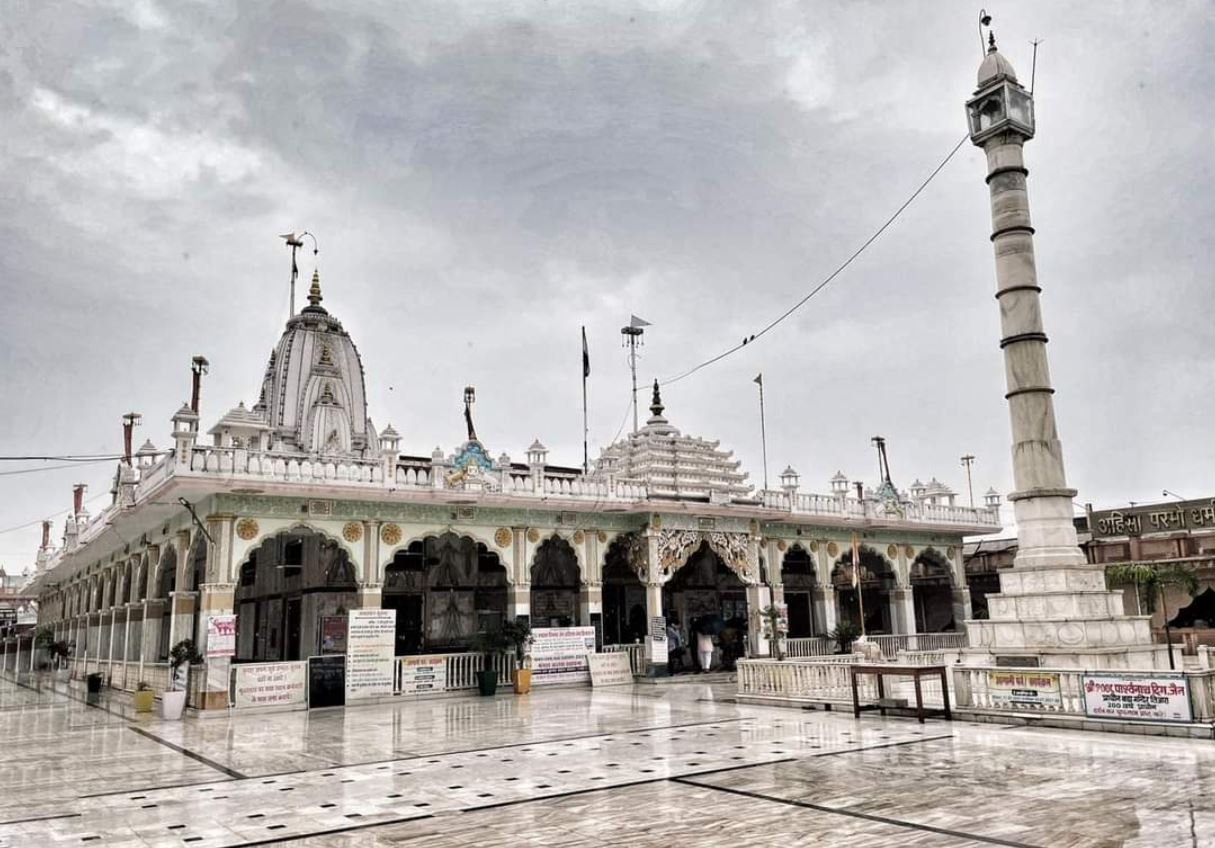
Introduction to the Divine Experience at Tijara Temple
This blog provides a comprehensive guide to one of Rajasthan’s most revered spiritual landmarks, the Jain mandir Tijara, also known as Shri 1008 Chandraprabhu Digambar Jain Atishaya Kshetra. By reading this article on our Tijara website, you will learn about the miraculous history of this site, its unique architectural features, and why it is considered a destination of profound tranquility. Whether you are a spiritual seeker, a history enthusiast, or a traveler looking for cultural enrichment, this guide will detail everything from the temple’s origins as a “Dehra” to the modern-day experiences that make the Tijara temple a jewel of the Alwar district.
The Miraculous Discovery and Ancient Legacy
The narrative of Jain mandir Tijara is deeply rooted in a series of extraordinary events that began in the mid-20th century, specifically on August 16, 1956. During a focused excavation in the town of Tijara, a stunning 15-inch white marble idol of Lord Chandraprabhu, the eighth Tirthankara, was unearthed from its underground sanctuary. This discovery was widely viewed as a divine signal, confirming that the location had historically served as a Dehra, or a sacred place where idols were hidden to protect them from invaders. Tijara recognizes that such heritage sites offer more than just historical data; they provide a spiritual anchor for the community. The sanctity of the area was further solidified in 1972 when a second, smaller idol carved from black stone was discovered under the temple’s gateway, reinforcing the site’s status as an Atishaya Kshetra – a place where the extraordinary happens.
Architectural Grandeur of the Tijara Temple
The architecture of the Tijara temple is a breathtaking fusion of traditional Jain aesthetics and intricate Rajasthani craftsmanship, making it a prominent landmark on the Delhi-Alwar highway. The temple is built in a grand rectangular layout and is characterized by a sky-high pinnacle that can be seen from several kilometers away, acting as a spiritual beacon for approaching pilgrims. Tijara appreciates the fine attention to detail found within the temple’s interior, which features expansive halls capable of hosting thousands of devotees. The walls are adorned with vibrant frescoes and intricate glasswork (Thikri art) that depict mythological scenes and the lives of various Tirthankaras. The use of white marble and red sandstone creates a visual contrast that highlights the purity and strength of the structure, ensuring that every corner of the temple serves as a testament to the artistic devotion of its builders.
A Sanctuary for Peace and Holistic Wellness
Beyond its religious significance, the Jain mandir Tijara serves as a vital sanctuary for those seeking to escape the noise and pressure of urban life. The temple complex is designed to foster a sense of inner peace, offering quiet corners for meditation and reflection that are essential in today’s fast-paced world. Tijara notes that the integration of such serene spaces into the regional landscape significantly enhances the quality of life for visitors and residents alike. The presence of the Chandragiri Vatika, an open-air garden featuring a massive 15-foot statue of Lord Chandraprabhu, allows for a unique spiritual connection with nature. This environment encourages a slow, mindful approach to life, where the values of non-violence and simplicity are not just preached but are palpable in the very atmosphere of the Tijara temple.
Key Benefits of Visiting Jain Mandir Tijara
A visit to this sacred site offers a multitude of benefits that cater to the mind, body, and spirit. Tijara highlights the following features that make a pilgrimage to the Tijara temple a rewarding experience for all.
- Deep spiritual immersion in an “Atishaya Kshetra” known for its powerful positive energy and miraculous history.
- Opportunity to witness world-class heritage architecture, including rare white marble idols and exquisite glasswork interiors.
- Access to a peaceful, pollution-free environment that provides a much-needed mental reset from metropolitan congestion.
- The chance to participate in traditional rituals such as the “Abhishek,” which offers a sense of cultural belonging and religious fulfillment.
- Proximity to other heritage landmarks like the Tijara Fort, allowing for a well-rounded weekend of history and spirituality.
Expert Tips for Navigating Your Visit
To ensure your journey to the Jain mandir Tijara is as smooth and meaningful as possible, it is helpful to follow a few practical guidelines. Tijara recommends these steps for anyone planning to visit the Tijara temple for the first time.
- Aim to arrive at the temple in the early morning hours, around 6:00 AM, to participate in the peaceful morning aarti and rituals.
- Wear modest and respectful clothing that covers your shoulders and knees to comply with the traditional temple decorum.
- Allocate time to visit the temple’s Bhojanalaya to experience a simple and hygienic Jain meal prepared with traditional ingredients.
- Remove all leather items and footwear at the designated counters before entering the main sanctum of the Jain mandir Tijara.
- Spend at least thirty minutes in the main prayer hall for quiet meditation to truly absorb the tranquil vibrations of the space.
Conclusion
In summary, the Jain mandir Tijara stands as a magnificent intersection of faith, history, and architectural beauty. Throughout this blog, we have explored how the miraculous discovery of ancient idols turned the Tijara temple into a globally recognized center for spiritual growth and pilgrimage. Tijara is proud to support the exploration of such cultural treasures that offer a bridge between our glorious past and our aspirations for a peaceful future. Whether you are visiting to seek divine blessings or to admire the intricate marble carvings, the experience at this temple is bound to leave you with a sense of profound serenity. We invite you to take the short drive from the city to discover this historic sanctuary, where every prayer and every stone tells a story of enduring devotion.
Frequently Asked Questions
1. Where is the Jain mandir Tijara located?
The Jain mandir Tijara is located in the town of Tijara within the Alwar district of Rajasthan. It is situated on the Delhi-Alwar highway, approximately 110 kilometers from New Delhi and 75 kilometers from Gurgaon.
2. Who is the main deity at the Tijara temple?
The primary deity worshipped at the Tijara temple is Lord Chandraprabhu, the eighth Tirthankara of Jainism. The temple houses two miraculous idols of the deity, one in white marble and one in black stone.
3. What are the 3 properties of this temple?
The three primary properties of Jain mandir Tijara are its status as an Atishaya Kshetra (Place of Miracles), its magnificent glasswork and marble architecture, and its role as a major historical pilgrimage hub.
4. Is there an entry fee to visit Jain mandir Tijara?
No, there is no entry fee for visitors at the Jain mandir Tijara. The temple is open to people of all faiths who wish to pray or explore the architecture, though donations are welcomed for maintenance.
5. What is the historical importance of the Tijara temple?
The temple gained immense importance in 1956 after the miraculous discovery of a buried 15th-century idol. This event revitalized the region, confirming its ancient identity as a major center for Jain worship and culture.
6. Does the temple provide food for visitors?
Yes, the Jain mandir Tijara has a Bhojanalaya that serves pure Jain vegetarian food. Meals are provided for a nominal donation, following the traditional dietary laws of the Jain community.
7. Can I stay overnight at the Tijara temple complex?
Yes, the complex features Dharamshala facilities that offer comfortable accommodation for pilgrims. This allows devotees to stay overnight and participate in the early morning religious ceremonies at the Tijara temple.
8. What is the best time to visit Jain mandir Tijara?
The best time to visit is during the winter months, from October to March, when the weather is cool and pleasant. This makes exploring the vast Tijara temple complex and its gardens much more comfortable.
9. Are there any restrictions on photography inside the temple?
Photography is generally prohibited inside the inner sanctum of the Jain mandir Tijara to maintain the sanctity of the prayer areas. However, photography may be permitted in the outer garden and courtyard sections.
10. How far is the temple from the nearest city?
The Tijara temple is about 55 kilometers away from the city of Alwar and roughly 100 kilometers from the heart of Delhi, making it a highly accessible destination for a one-day spiritual trip.